Showing posts with label comics. Show all posts

Sunday, July 3, 2011

Review: X-Men: First Class and Super 8


X-Men: First Class is the fifth film in a franchise, but you wouldn’t know it to look at it.  True, it has several in-jokes that depend on knowledge of earlier movies, but it has a freshness, fun, and vitality to it that none of its predecessors were able to muster, and that makes it a rare thing in the world of big-budget blockbusters,  It is questionable whether it is the best film in the series so far--though it’s a photo finish--but a franchise that can maintain and even improve itself this far into its run without a complete reboot is almost unheard-of in Hollywood (Harry Potter is the only example I can think of off-hand).
Leaving behind “The not too distant future” of the first 3 X-Men films, First Class goes back in the time to the 1960s to tell the origins of the two patriarchs of the original trilogy, Professor Charles Xavier and Erik “Magneto” Lensherr.  In the future they were enemies, but they began as friends, and the story of that friendship and how it broke over the irreconcilable differences in their philosophies.  In the ‘60s, the existence of mutants is not widely known, but a few of them are soon recruited by the CIA to aid in the Cold War.  In fact, it turns out that the Cuban Missile Crisis was almost entirely caused and ended by mutants.

Tuesday, May 31, 2011

Recent Movie: Thor

Light and frothy, Thor is essentially a kids movie, with shiny costumes and goofy characters.  As such, it is harmless summer entertainment, though not very compelling, with little real danger or violence and stakes that are so ridiculously huge that they have relatively little urgency.


The sets and effects are big and overblown, and they achieve a certain kitschy grandeur.  Most of the characters are given short shrift, especially the earthly ones, who are entirely one note.  The only actors who come out of this looking good are Chris Hemsworth, excellent in his first starring role as Thor, Tom Hiddleston, Machiavellian and (relatively) complex as Loki, and I suppose Idris Elba, as the intimidating Heimdallur.  The plot is both convoluted and simplistic, with an akward structure attempting to support universe-spanning events rendered in the most obvious comic book-y way; the type of thing where characters can destroy inter-dimensional pathways with hammers.  That might be the best way to think of the movie: as a sixties-era Marvel comic writ large.  It has an innocence and cheerfulness that mostly makes up for its general silliness.  On the other hand, I can easily see the general cheesiness of many scenes leading it to become a cult classic 20 years down the road, watched only for its camp value.  As you can see, I'm of two minds with this one, but I think its good nature wins out.  It's dumb, but not stupid, tiresome, or offensive.


Rating: 6/10 Stars.

Saturday, April 2, 2011

Sam Raimi's Spider-Man 2 (2004)


This post is for the Raimifest blogathon over at Things That Don't Suck.  It's my first-ever blogathon post, so I'm pretty excited.


If the superhero movie were the western, Superman: The Movie would be Stagecoach--the masterpiece that kicked the genre off in earnest--and The Dark Knight would be The Searchers--the one that revealed the dark heart of the genre, which all others will be measured against afterwards.  But Spider-Man 2 would be Shane, the quintessential evocation of all the genre represents, the clearest version of the basic superhero myth yet produced.

The triumphant sequel to 2002's Spider-Man, which is arguably the quintessential superhero secret origin story (though not the best), Spider-Man 2 provides a blueprint for other superhero sequels to follow.  With the origin story out of the way, the movie can focus on what it does best: the eternal conflicts between hero and villain, hero and love interest, and the call of duty against the wish to have a normal life.  These conflicts are at the heart of any traditional superhero tale, and Spider-Man 2 embodies them more fully than any other superhero movie I know of.

What makes this unique is that it manages to be a full and fully satisfying film while focusing entirely on its central character and his central conflicts.  Like Shane, this is a movie content to tell an old tale in the most simple and iconic way possible and succeed on that basis alone.  It doesn't try to do too much.  Unlike Superman, it doesn't engage in Fordian romanticization, high concept science fiction, or grand epic storytelling.  Unlike The Dark Knight, it doesn't attempt a complex dialectic on the nature of good and evil, law and order, chaos and civilization.  Unlike X-Men, it's not a metaphor for major political issues, and it doesn't involve multiple super-powered characters, each with their own underdeveloped character arc.  It's about Peter Parker, an everyday guy that anyone can relate to, who happens to have superpowers and has to figure out to use them while simultaneously dealing with his own love life and trying to hold down a job.  It's centered in New York City, and it stays there the whole way through--no need to travel the globe or fight battles that threaten the entire planet.  There's plenty of crime to deal with right here, on the smaller, more believable scale.

I confess that I have seen few of Sam Raimi's other films.  My familiarity with him is limited to the Spider-Man trilogy and The Quick and the Dead, a film I found godawful and difficult to sit through.  I have heard from many sources how great his Evil Dead trilogy is, and Darkman and A Simple Plan both look intriguing.  All are on my list to see.  But on the basis of the films I have seen alone, I would still say he is a remarkable director.  Not one of the all-time greats, but one who is capable of working with large budgets on pre-existing properties and making things that give the fans what they want while staying true to his own vision and sensibilities.

The most extraordinary thing I find about Spider-Man 2, is Raimi's ability to juggle great divergences in tone and mood so effortlessly.  It starts with the look and attitude of the film.  Unlike Christopher Nolan's  Batman films, which seem to be attempting to escape their comic book origins by becoming ever more dark and realistic, Raimi's Spider-Man is unapologetically bright and sunny, full of bold colors and fights in broad daylight.  The movie feels like a comic book, and it gets the simple sincerity and enthusiasm that made the original comics so popular and timeless--unlike so many other superhero movies which just come off cheesy, Spider-Man 2's sincerity and decency redeem it.  It doesn't mind offering idealistic speeches once in a while--"I believe there's a hero in all of us,"  "With great power comes great responsibility"--and it is capable of presenting these as simple, heartfelt truths without letting them come as corny, putting an ironic, cynical twist on them, or treating them with such intense seriousness that they become pretentious.  This is an increasingly rare quality in movies these days.  It is something that old masters like Frank Capra and John Ford made their careers on, but no one outside of perhaps Spielberg, and now Raimi, seems able to do today.

The film dances from scene to scene with effortless grace, moving from slapstick hilarity to deadpan subtlety in an instant, then on to intense action with a clear sense of danger, and desperately sad scenes that pack an emotional wallop, then instantly back to humor again without ever tripping over itself or not giving its emotional high points their due.  He even manages to fit in a scene of real terror that feels like something out of a horror movie, when Octavius's tentacles come alive and slaughter the roomful of doctors and nurses.  A big part of the credit for this ought to go to Tobey Maguire, who is perfect as the mild-mannered Peter Parker, a kid who can't catch a break.  He can play the deadpan stuff as straight as Buster Keaton--check him out in the elevator scene, where he complains about the suit chafing a bit too much--but he can also display such infectious enthusiasm we can't help but laugh with delight--see the "Raindrops Keep Fallin' on My Head" scene, a reference to another famous western.  He is cute and lovable and innocent, his tears are heartfelt and pathetic, yet he can shift in an instant to righteous anger and heroic action.  This is not an easy combination to pull off, but Maguire never falters, and Raimi shapes his film around that performance.

Hearkening back to '80s style Spielberg and Robert Zemeckis, Raimi manages to ladle on the humor and fun and action without neglecting the weighty, iconic image.  He has a terrific sense of pacing which allows scenes to build at their own speed without ever feeling slow or boring, and lets the images tell the story.  Think of the shots of Spidey unconscious on the train, being carried along by the passengers--a shot that could easily have come off as pretentious or too much, by the way, but just avoids it--or the Doc Ock standing tall on the side of a building, daring Spider-Man to come after him, or the super-low angle shot of Peter's fist tightening as his anger builds and he determines to go after the Doc to rescue Mary Jane.  This is not a film that neglects the crowd-pleasing "epic" moments, its a film that knows how to balance the epic with the small to create something truly special.
So I'm finished, and I haven't even talked about what a great villain Alfred Molina makes, or how other supporting actors like J.K. Simmons, Kirsten Dunst, and James Franco are so important to the films success.  I haven't mentioned the film's terrific fight sequences, or the highly creative and intense way they are staged, despite being mostly in CG.  I suppose the best way to sum up my feelings about the is film is this:  This movie is the best example of why I love the superhero genre.  When done right, like here, it can be profoundly simple, yet heartfelt and honest, an all-American ideal of heroism and democracy.  This movie embodies more clearly than any other why the superhero is an American icon as enduring as the cowboy, and why the superhero film is the most dominant genre of this new century.

Sunday, November 28, 2010

Review: Scott Pilgrim vs. the World


Where was the audience when this movie came out in August? For some reason, people stayed away from it in droves, thereby missing out on one of the most hilarious, creative, and original movie in years. There has never been anything quite like it in the world of film, and for that reason alone it would be worth seeing.
Scott Pilgrim is a young college graduate living in Toronto with a roommate, trying not to think what he ought to do with his life. He starts the movie dating a high school girl named Knives Chau, but soon loses his heart to the girl of his dreams, Ramona Flowers, an exotic beauty from New York. Problems ensue. Namely, Scott has to attempt to juggle two girls, while Ramona’s Seven Evil Exes attempt to kill him at every opportunity, obliging him to engage in numerous video-game-style battles to the death (death in this movie consists of popping out of existence, leaving a pile of coins in one’s wake). If that sounds complicated, it is, but it doesn’t feel that way while watching the movie. Events whip by so fast your head might spin, but you will certainly never be bored.
The comedy in this movie comes from everywhere (the characters, the situation, the environment, the story), in every form (verbal wit, slapstick physicality, general goofiness), using every trick in a director’s book (musical cues, special effects, sound effects, cinematography, and editing). This bewildering barrage of humor might be unprecedented if it did not come from Edgar Wright, director of Shaun of the Dead and Hot Fuzz. His style was apparent from the first film, and he has only broadened and honed it since. It is worth noting that over half the gags come straight from the sources comics by Brian Lee O’Malley, but their transference into film is still remarkable and unique. Many effects have never been seen in a live-action film before, though quite a few will be familiar to fans of Japanese anime, and various Asian B-movies. Wright manages to appropriate techniques from video games, comic books, music videos, and animation, without every making us feel we are not watching a movie. This is experimental cinema masquerading as mainstream blockbuster.


Scott’s world consists entirely of teenagers and 20-somethings--no older or younger people exist. This makes the film’s scope limited perhaps (and probably limits its audience--I doubt many people over 40 would be interested), but then Wright and O’Malley are not trying to distill all life, just embody a certain brief period in the lives of the Millennial generation. This they do extremely well. Unlike The Social Network, though, which attempts to analyze its era in depth, Scott Pilgrim exemplifies life in the 21st century by playing with our collective fantasies and entertainments, swirling it all up in a colorful mix easily digestible to our miniscule attention spans. First, they get the culture right. The old John Hughes eighties rules of cheerleaders, jocks, math geeks, and screw-ups no longer apply. Scott Pilgrim’s world is populated by gamers, geeks, jocks, hipsters, slackers, indie rockers, celebrities, and Asians. If the story took place in an American city, there would no doubt be more minority representation, but this is Toronto. (An example of the new melting pot: Knives comes from an immigrant Chinese family, but goes to a Catholic high school.) Scott himself embodies several of these categories--he is a gamer, a geek, and a mild rocker--but he is mostly a slacker. The story is not a celebration of this slacking, though, but a call to resist it, put it behind one, and grow up. Scott’s growth is clear over the course of the film: he must learn to take responsibility for his actions, become proactive instead of passive, and put others before himself. Cera plays the part deftly, alternating from dumb to sweet to heroic with ease. He has taken criticism for always playing the same character, but with his last couple movies he is proving these critics wrong by expanding his range in several directions.


The weak point in the movie may be its female characters. They are everywhere, but most get little screen time, and we never really understand them, especially Ramona’s inexplicable attraction to Scott. This is not the fault of the actors involved--every single one of them is perfect, and I wish I could single all of them out for individual praise. The graphic novels, of which there are six, allow much more time for the relationship to develop and have scenes which focus on characters other than Scott. If you felt a little lost in the story or just wanted more of it all, I highly recommend the comics. They give needed back story and definitely added to my appreciation of the movie. In the end, though, I think I prefer the movie. It really does a fantastic job of packing everything in the comics into 112 minutes--the entire first book is in there mostly word-for-word--and the jokes are often funnier onscreen than on the page--adding color and sound helps a lot. As for character development: We see everything from Scott’s perspective, and he doesn’t understand the girls around him at all, so how are we supposed to understand them? He spends most of the movie being remarkably selfish--his journey is about learning to appreciate others as separate individuals in their own right. I think the movie accomplishes that.
With this film, Edgar Wright has surpassed previous genre parodists like Mel Brooks, and become a true auteur of the cinema. It was always obvious that his movies were better than the average Scary Movie clone, but now it is clear that his only peers among current directors are Quentin Tarantino and the Coen Brothers. The older generation might never get him, but I think his works will become classics to be watched for years to come.

Another good review which says most of what I just did better can be found here. And lots of other great reviews and perceptive comments can be found here.

Rating: 10/10 Stars

Monday, October 25, 2010

Superman (Donner, 1978)


Superman: The Movie is the first modern superhero film. While the current cycle of big-budget, high-profile superhero movies have begun with 1998’s Blade or at least 2000’s X-Men, the superhero film as we know it started with Superman in 1978.

Before that, superheroes had had plenty of big-screen incarnations, but they were all fairly low-budget, often matinee serials, and nearly all of them have been forgotten. The exception might be 1966’s Batman: The Movie, which starred Adam West and Burt Ward, and was a spin-off of the popular television series. However, this was an exception only in the sense that it has not been completely forgotten; otherwise, it was low-budget, poorly acted, uninterestingly directed, and had little to no influence on Hollywood.
Superman: The Movie, on the other hand, was a big-budget effects extravaganza. It had several A-list actors, including Marlon Brando, Gene Hackman, and Jackie Cooper. It had an up-and-coming director in Richard Donner, fresh off The Omen. But most importantly, it was the first movie to ever take the idea of superheroes seriously. And because of that, Superman deserves to be remembered as the genre’s founding masterpiece, the superhero’s Stagecoach or Maltese Falcon. It may seem pretentious to mention these films in the same breath, and I will not claim that Superman is the equal to the others in artistry or even influence, but I believe the comparison is more worthwhile than it might seem.


The first half of the film is epic, stirring, and mythic in a way that no other superhero movie I’ve seen has ever been. The grand opening on Krypton is otherworldly beautiful, reminiscent--to me, at least--of 2001: A Space Odyssey. (Like a Ray Bradbury story, though, it retreats from scientific explanation and allows space to remain mysterious and magical.) Director Donner saw this as an American epic, a Paul Bunyan tall tale crossed with science fiction, John Ford crossed with Star Wars. There are religious overtones to Superman’s story as well--he is presented as a secular savior for mankind, a hero to not only defeat bad guys, but to stand as a model of goodness and decency for a world that had almost forgotten what those things were. Brando as Jor-El is an almost Biblical figure, Old Testament prophet as alien scientist, whose words roll out with the finality of holy writ: “They can be a great people, Kal-El, if they wish to be. They only lack the light to show them the way.”

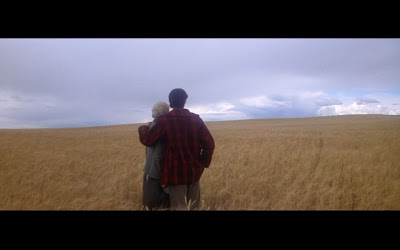
Donner is also unabashedly patriotic, depicting an America of yesteryear that recalls Norman Rockwell one minute and admires the Art Deco skyscrapers the next. He and cinematographer Geoffrey Unsworth stage everything in glorious Cinemascope, with lots of light and heroic and classical poses. Clark and Martha Kent stand out in a wheat field, staring into the horizon, while discussing his future. Metropolis is obviously New York, filled with a bustling industriousness and built with good old American know-how. When Superman takes Lois flying, the Empire State and Chrysler Buildings are visible below them. (The World Trade Center seems to be omitted, however, probably because it had just been built and the film was supposed to seem timeless.) The film is helped immeasurably by John Williams’ iconic musical score. I am no judge of the score’s musicality or originality, but I can say that I find it stirring as few other scores in film. I think it is grander and more exciting even than Williams’ scores for Star Wars and Indiana Jones. When the trumpets begin as the credits start to role, it is impossible not to feel excitement and anticipation, and the effect is just as strong whenever the music grows later in the film.
This is innocent filmmaking, joyful and without a trace of irony in its glorification of heroism. This is rare today, but it’s easy to forget how rare it was then. It was the 1970’s, after all, and it had been over a decade since American filmmaking had had anything innocent about it. The New Hollywood had been reigning since 1967, and American cinema had been more and more suffused with sex and violence and moral ambiguity. Even the reactions against the culture of the time, like Dirty Harry and Death Wish, were highly violent and morally suspect. The Vietnam War had ended, and Watergate had been pretty well mopped up, and America was ready to feel hopeful again. The last two years had seen a couple of hopeful movies, in the form of Rocky and Star Wars, but they were still few and far between, and neither of those films were as innocent as Superman, an action film where only two people die by violence, and only one of them stays dead. Audiences rewarded this optimism and grandeur, giving it a domestic gross of $134 million--over $450 million in today’s terms. Plus it made even more than that overseas, meaning it would probably be a $1 billion movie today. (Incredibly, it was only the second biggest blockbuster in the U.S. that year; Grease was number one.)
It is innocent filmmaking, but it is not naive or stupid filmmaking. Richard Donner and the many screenwriters (or at least the last couple) understood that they were selling a myth, but to be relevant and connect with viewers the myth had to be relatable. We must be awed by the character, but we must also feel he is speaking to us. The latter half of the film drops some of the mysticism and grand backdrops, and places Superman firmly in the modern world, among average city people. The tone shifts from reverential to humorous and exciting: the newsroom at The Daily Planet crackles with energy and wit: “I want the name of this flying whatchamacallit to go with the Daily Planet like bacon and eggs, franks and beans, death and taxes, politics and corruption!” The humor of the movie is one of its strongest traits--it knows how to enjoy itself, to poke just a little gentle fun at its hero and legend. It never goes too far, though, never really criticizes its hero or succumbs to irony. While the script is quite clever, the movie really avoids this because of the actors. Lois Lane (Margot Kidder) and Perry White (Jackie Cooper) are hard-working, cynical New Yorkers. They are not, perhaps, inundated with the stench of an immoral city out of Taxi Driver (or Batman, for that matter), but they expose corruption every day and have lost their naivety long ago. When Superman shows up, he contradicts all that, standing unabashedly for truth, justice, and the American way. When Lois hears that, she wisecracks, and when he tells her he never lies she is almost speechless. (It is perhaps worth noting that while Superman may never lie, Clark Kent lies all the time.) Lois is the audience’s proxy here, and without her this might all seem a bit stupid. But with a clear source of cynicism to push against, Superman’s optimism and morality can stand out all the brighter.
Obviously, the movie wouldn’t be what it is without the performance of Christopher Reeve as Clark Kent and Superman. A former stage actor who graduated from Cornell and studied at Juilliard, his performance here is not of the Method Acting kind that wins awards, but it is a kind that we cannot help but like. As Superman, he is tough, heroic, but funny and approachable. As Clark Kent he is clumsy, weak, but stops just before becoming cringeworthy or irritating. With this movie, he went from nobody to icon in a moment, and has become forever associated with Superman in the public’s mind. Every other actor who plays Superman will always be compared to Reeve. The great Gene Hackman plays a campy incarnation of Lex Luthor--not my favorite interpretation of the character, but for what he is he’s excellent. The character Luthor can be diabolically evil, and in the comics he has far more nuance and complexity, but here he is a comic-relief villain, and that works fine; the film does not require a cruel, violent villain to make it more exciting. And his final plan to kill Superman by sending two missiles in opposite directions and tricking Superman into looking for the kryptonite is pretty brilliant when you think about it (if only he’d kept a better eye on Miss Teschmacher).

Of course, the movie is not without its flaws: The cringeworthy “Can you read my mind?” scene, where Lois rhymes in voice-over about falling in love with Superman. The overly campy acting of Ned Beatty as Luthor’s hechman. The special effects have aged somewhat. And of course, the fact that Superman can turn back time by flying really fast and making the world turn backward, a skill that pretty much makes him all-powerful. It should be noted, though, that in the comics at this point, Superman pretty much was all-powerful, with everything from “amnesia kiss” to “freeze breath” to the strength to move whole planets around in his repertoire of powers. This is a far cry from Action Comics #1, where he couldn’t even fly, merely “leap tall buildings in a single bound.” So while this movie and its sequels gave him powers far beyond what was really necessary, it can’t all be blamed on them. I would also argue that the film’s overall atmosphere and sense of wonder, make the ending perfectly tolerable. It is a fantasy, and it has a fairy-tale ending.
Even with these flaws, though, the film flies high as one of the great entertainments. It is the first superhero movie to treat its subject seriously, the first to be wildly successful, and the first to become a classic. It is the quintessential depiction of an American icon, and it will always be the one against which all other Superman movies are judged.

Friday, July 30, 2010

Three Recent Movies: The Karate Kid, Toy Story 3, Kick-Ass


The Karate Kid is a needless remake that still hits all the right notes. It does all the expected things, follows the predictable plot-line, but it does it well, and it works. Jaden Smith is solid and likable enough as the titular kid, Dre, and Jackie Chan is excellent as his mentor and coach, Mr. Han. The movie is a good 20 minutes too long, and it takes itself a bit too seriously--the training montage feels at least 10 minutes long, and involves an incredibly difficult array of exercises for a 12-year-old--but these are surprisingly minor gripes about what is a very solid, even commendable, family film.


Toy Story 3 is another Pixar triumph, without question one of the best films of the year. There's really not much else that needs to be said. It meets or surpasses the bar set by the previous two movies, once again filling the screen with the beloved characters who have become worldwide stars over the past fifteen years. There's a great deal more action--including a coordinated break-out sequence that puts The Great Escape and Ocean's Eleven to shame--as well as more sentiment, including the saddest ending the Pixar team has yet created. I'd like to say something more perceptive and insightful here, but I can't think of anything right now. I'll probably write more on it in the future.


Kick-Ass is not a film that caters to every taste. It is alternately crass, vulgar, and graphically violent, and it is easy to see why people would be turned off. I, however, was highly entertained by it. The movie is perhaps best described by a commenter on IMDb who described it as a cross between Superbad and Kill Bill. Indeed, the movie seems directly influenced by both of these, with it's sex-obsessed, slacker high schoolers and its brightly colored, tongue-in-cheek, action sequences featuring swords and spraying blood. Apparently most offensive to many viewers (including Roger Ebert), was the character of Hit-Girl (played by Chloe Moretz), an 11-year-old girl responsible for most of the blood spraying violence. I'm not going to attempt to defend the movie's morality, which is pretty indefensible, except to point out that all but one of the deaths in the film are lacking in emotional and narrative weight, and suggest that basically all the dead bad guys deserved to die according to common action movie conventions. I'm more interested in the way the film attempts to subvert and deconstruct the superhero genre.
The movie is based on a graphic novel by Mark Millar and John Romita, Jr. Millar is one of the most popular writers in comics right now, as well as one of the most immature and overrated. While he has excellent ability to write action and has written at least one truly excellent all-around book (Superman: Red Son), most of his stuff is filled with pointless blood and gore, awful dialogue, and (especially in the case of Wanted) a complete lack of morality. With this book, he sets out to create a savage parody of the average comic-fan's dreams of becoming a superhero and suggest what wackos people would have to be to actually try it. The movie follows his plot pretty closely--with one notable adjustment--but ultimately ends up more satisfying and entertaining, as well as just slightly more thoughtful and even human.
The movie's influences are numerous (thought not exactly broad), including Quentin Tarantino and Judd Apatow (as mentioned before), John Woo's Hong Kong action epics, Edgar Wright, and just about every other superhero movie ever made. Each superhero in the movie seems to be styled after a different "real" hero and his movie(s). Kick-Ass himself is patterned after the Sam Raimi Spider-Man movies: He lives in a suburban home that looks almost exactly like Peter Parker's, has a clumsy training montage on top of rooftops, and rather pitifully attempts to be cool and get the girl like Tobey Maguire does. Big Daddy (played by Nicolas Cage, in a delightfully wacky performance), is obviously modeled on Batman, with the body armor and bone-crunching martial arts of Christian Bale, but the speaking voice of Adam West, complete with portentously silly pauses in between words. Red Mist (Christopher Mintz-Plasse) could arguably be inspired by the Joel Schumacher Batman movies of the '90s, with his garish red-black-and-purple suit and vehicle that seem somehow disturbingly plastic and ugly. His last line appears to be a reference to Jack Nicholson's Joker in the original Tim Burton Batman. Hit-Girl is the most daring creation, though, subverting the image of the teen side-kick almost beyond recognition. Gone is the always-fantastical Boy Wonder who could cheerfully learn to fight crime alongside Batman or other heroes, growing up perfectly well-adjusted with no adverse effects. Slightly younger than the usual sidekick and a girl to boot, she is systematically brainwashed by her father and trained to be the ultimate killing machine. With no friends or regular schooling, she loves guns and knives above all other toys, spouts extreme profanity, and displays joy in slaughtering gangsters, cutting off limbs and heads with abandon. While her feats are obviously impossible, her character is still the most interesting take on a comic tradition that has come along in years, suggesting the ugly necessities under the childish fantasy.
These styles are more than just clever references, though, because the characters are often aware of the "real" superheroes they're imitating. Kick-Ass explicitly begins his mission by wondering why no one ever wants to be Spider-Man instead of Paris Hilton. Big Daddy draws comic stories to explain his crusade to Mindy/Hit-Girl, and gangsters describe him as "a guy dressed like Batman." Their entire world is already saturated by knowledge of superheroes, and the ones they imitate therefore take on special significance.
Ultimately, though, the movie leaves behind its explosion of superhero movie conventions to end with an exciting, action-packed climax where the good guys win and the bad guys lose. While the graphic novel has a similar ending, the film decides to make the good guys more heroic [SPOILERS]: Kick-Ass actually contributes to the final battle, and gets the girl instead of being rejected as a creepy stalker. Big Daddy's mission is also somewhat noble, in the sense that it really is a revenge mission in the face of a corrupt system; in the book, he's just a right-wing militia type who wants to give his daughter an exciting life. The film drops this subversive nugget, but in turn it deepens the relationship between father and daughter, giving real emotion to his death and a real sense of danger to the final battle. While the film stops short of subverting the superhero genre as much as the book, it ends up far more satisfying and positive, deciding to offer real entertainment instead of mockery, and that left me with a good feeling.